
 At the GLENRAC workshop on February 13, 2024, more than 30 landholders gathered at the Cromarty woolshed to tackle on-farm waterway health and improve stock water systems. Experts like Matt Ridley from The Pump Shed and grazier Dave Worsley shared valuable insights on planning, building redundancies, and protecting waterways while ensuring adequate water supply for livestock. The discussions highlighted the importance of strategic planning and the use of innovative tools like Ag360 to manage water systems and address challenges posed by drought and erosion. Click the heading to read the full article, including planning tips. Click the header to read more.
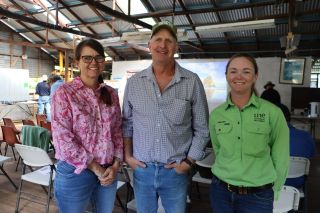
Landholders at Ben Lomond tackled on-farm waterway health and improving stock water systems, at a GLENRAC workshop on February 13 2024.
At the GLENRAC workshop in the Cromarty woolshed, The Pump Shed’s Matt Ridley started the discussions with tips on how to plan for installing or upgrading a stock water system.
“As a rule of thumb, it’s not too much from my experience to gear to the numbers you will be running, rather than ‘oh, this will be enough’,” Mr Ridley said.
“In the last drought, in winter stock were using the same amount of water as summer consumption, because of the supplementary feed, including salt.”
As well as planning to deliver litres per animal per day, Mr Ridley said graziers should also plan for problems.
“In any system, it’s best to have a contingency, especially as there may be a delay in parts delivery for repairs,” he said.
“You can’t afford to have no water at all.”
This was backed up by Dave Worsley, a grazier from Nullamanna, one of the landholders taking part in a project with GLENRAC and the Armidale Node of the SQNNSW Innovation Hub, to investigate best practice stock water systems for the local area.
“The biggest problem with my (original) system was no back up, so that when the pump went bang, everything went bang,” Mr Worsley said.
His system now has redundancies, a monitoring system and plans for further infrastructure improvements.
Manager of Winston Park and workshop host Anthony Rosser said as part of the stock water project, he was assessing two possible configurations for an upgraded water system on the Ben Lomond property.
“There’s a huge productivity gain to be had there, by installing troughs and keeping cattle out of the dams, and improved water quality and security,” he said.
“The other benefit is the protection of our local creeks and streams, allowing our creekbanks to revegetate and stabilise, because there’s some quite steep areas where stock do access the water and obviously, it’s inevitable there’s some sort of erosion occurring and therefore sediment going into the stream.”
University of New England aquatic ecology expert Dr Sarah Mika told attendees that while stock could damage riparian areas, they could also be used as part of successful management.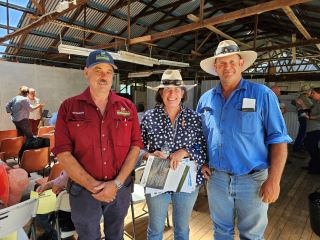
Dr Mika said while fencing stock off wateways could help improve conditions, it could also allow weeds to flourish, which was when brief periods of crash grazing could be effective.
SQNNSW Drought Hub Armidale Node Manager, and sheep grazier, Lu Hogan said from her experience, four to five days a year (depending on stock numbers) could be enough to keep weeds under control on fenced creeks.
For those unsure about the current state requirements when planning new stock water systems, upgrades or maintenance, Pat Yeates from the NSW Natural Resources Access Regulator told attendees the outreach officers were available to answer questions on stock and domestic water rights.
Other speakers on the day included UNE’s Jaimi-lee Edwards, who provided an update on a Future Drought Fund project helping landholders in the area make informed decisions with both short and long-term goals in mind, including incorporating climate forecasts into feed budgets via the use of the free Ag360 online tool.
NSW Local Land Services Drought Adoption Officer Matt Champness updated the farmers on available drought support measures, including the new NSW Drought Fire and Flood Guide.
GLENRAC CEO Kylie Falconer said all of the speakers on the day faced extensive questioning.
“I think the questions were the proof in the pudding for me. People came with specific questions in mind and asked them all.”
Ms Falconer said more than 30 farmers were in the room for the workshop, travelling from Inverell to Walcha, and Guyra to Glen Innes.
The Drought Resilient Pasture Landscapes Project and the Armidale Node of the SQNNSW Innovation Hub receive funding from the Australian Government’s Future Drought Fund.
Release: February 19, 2024